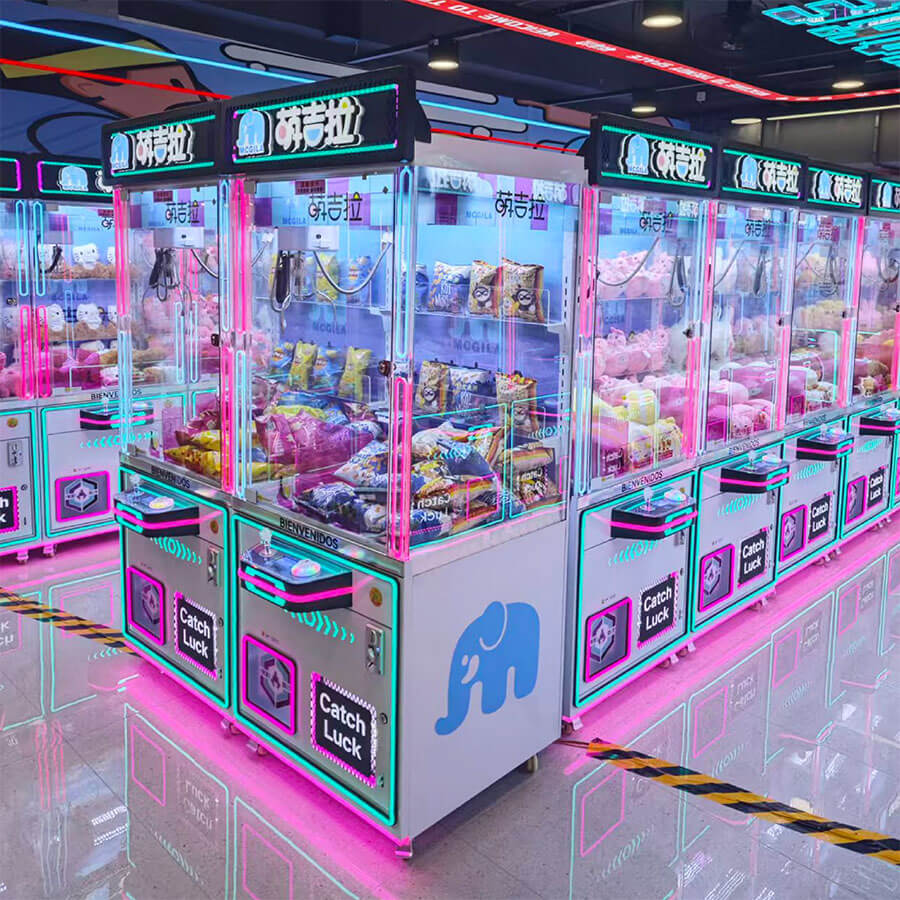
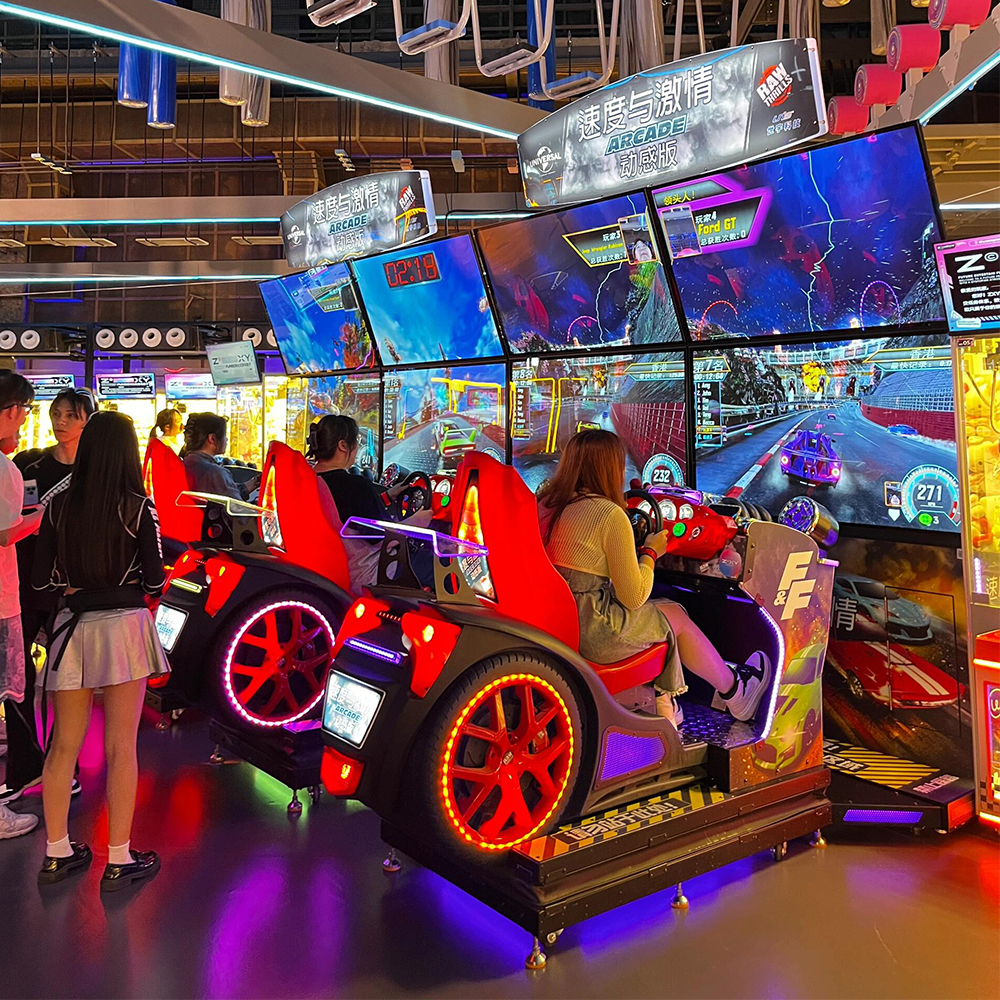
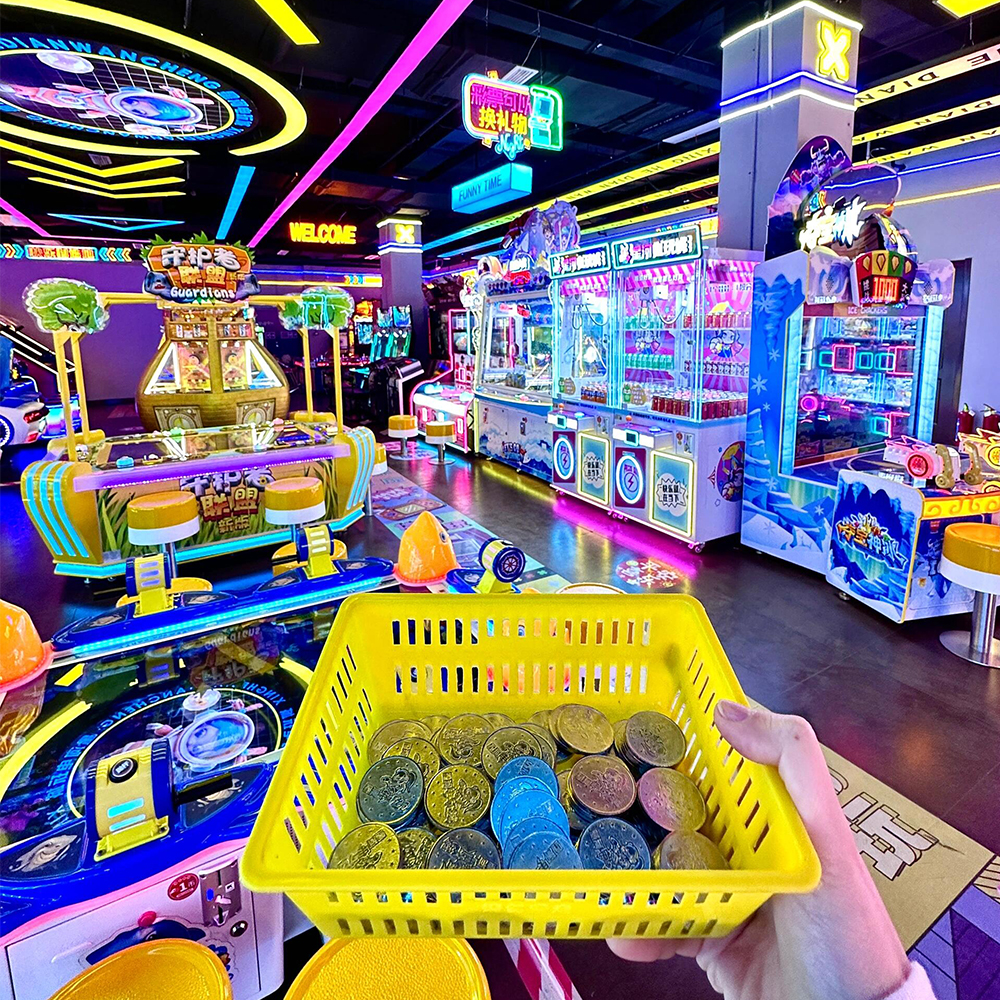
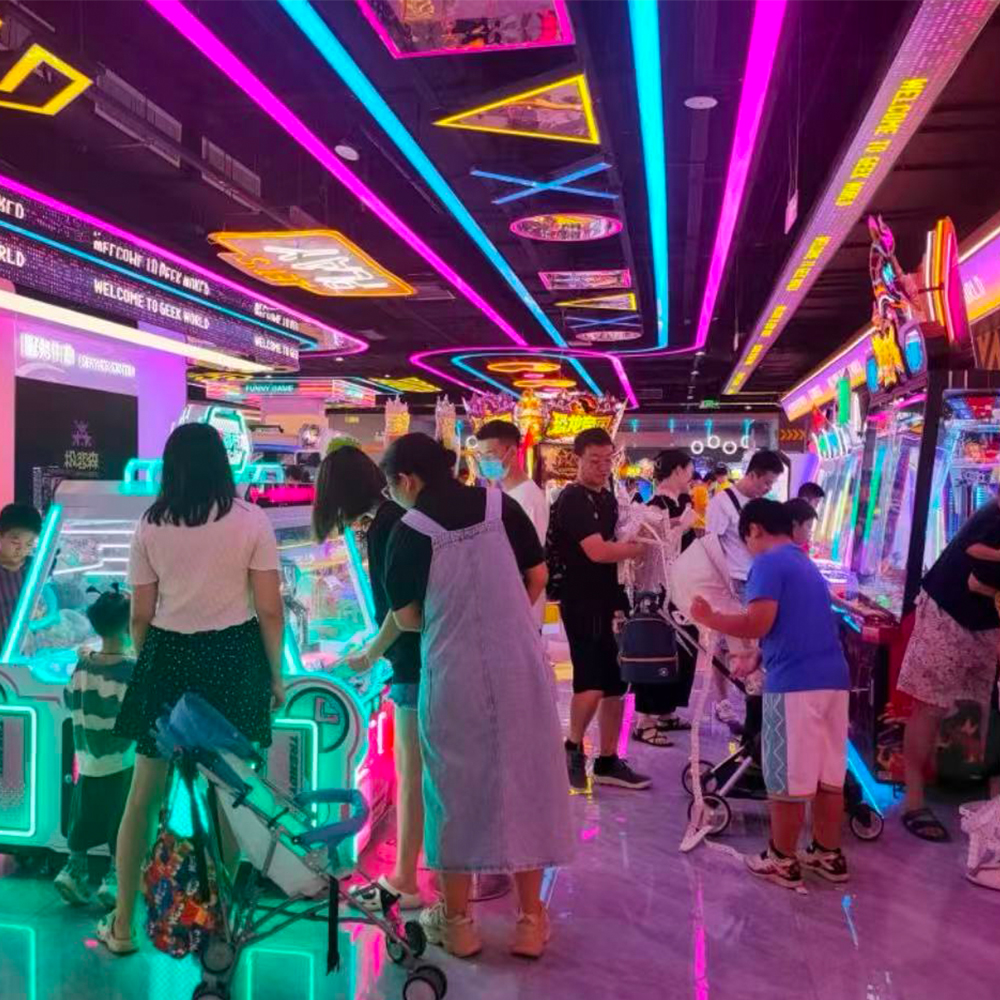
In the modern arcades filled with high-speed, high-decibel thrills, claw machines and various prize machines seem like a breath of fresh air. They lack the frenetic pace of racing games and the intense competition of shooting games, but with their unique charm, they have become an indispensable cornerstone of almost all comprehensive arcades. From a professional operational perspective, these machines are far more than simple “claw machine” toys; they are meticulously designed core engines driving commercial success.
I. Low Barrier to Entry and High Attractiveness: Traffic Entry Point and Icebreaker 1. Extremely Low Barrier to Entry: Unlike large-scale motion-sensing or arcade games that require familiarity with complex operations and game backgrounds, claw machines operate with a logic so intuitive that no instruction is needed—”move, lower claw, grab.” This allows them to attract the widest range of customers, including children, teenagers, couples, families, and even adults who rarely play video games. This zero-learning-cost characteristic makes them the best “traffic entry point” for arcades.
2. The Instant Allure of Tangible Rewards: The psychological principle of “tangibility” plays a crucial role here. Compared to virtual scores or rankings earned in games, a tangible plush toy or trendy gift provides a more direct and stronger incentive. This anticipation of “potentially obtaining a tangible item” is far more appealing to the mass market than “breaking personal records,” effectively reducing users’ decision-making costs and making it the perfect “icebreaker” game.
II. A Sophisticated Business Model: Guaranteeing Stable Profits From a financial perspective, claw machines and prize machines are highly efficient assets within an arcade.
1. Controllable profit margins and high gross margins: The profitability of these machines does not rely on luck, but rather on precise probability settings. Operators can scientifically control the overall “distribution rate” by adjusting the claw’s gripping force, setting the interval between successful grabs, and the placement of prizes. A well-designed claw machine maintains a stable and considerable gross margin between its costs (prize costs + venue rental + electricity) and revenue (coins inserted), typically between 30% and 50% or higher, providing a stable and reliable source of cash flow for arcades.
2. Master of Space Efficiency Optimization: In commercial real estate, “space efficiency” (revenue generated per square meter) is a core indicator. Claw machines occupy a small area and can be densely arranged to form a high-conversion “gift matrix.” Compared to a large motion-sensing racing game machine occupying a large space, a row of claw machines can serve more customers per unit area, generating higher aggregate revenue and greatly optimizing the store’s space efficiency.
III. Strategic Customer Operations and Experience Shaping 1. Extending Dwell Time: Players often attempt to win a desired prize multiple times. This process significantly extends their dwell time in the store. Longer dwell time not only directly increases spending at the machine itself but may also translate into secondary spending in other areas (such as coin pushers or music game areas), thus increasing the average transaction value.
2. Social Catalyst and Emotion Generator: The claw machine area is a natural social space. Couples working together, friends brainstorming, and parents cheering on their children create positive social experiences. Whether it’s the cheers of success or the regret of failure, there’s a dramatic emotional tension. These positive emotional experiences are key to shaping customers’ brand affinity for the arcade, far surpassing the game itself.
3. An Excellent Platform for Brand Collaboration and IP Monetization: Modern gift machines have long transcended the traditional realm of plush toys. They can now hold figurines of popular anime, co-branded products from trendy brands, electronic products, and even cosmetics. This provides arcades with opportunities to collaborate with external brands. By introducing IP products, arcades can not only attract fans from specific demographics but also enhance the perceived value of the gifts and the machine’s appeal, achieving mutual brand value enhancement and traffic exchange.
IV. The Evolution of Gift Machines: Diversified Reward Experiences Besides the classic claw machine, the gift machine family also includes:
1.Two-Claw Lottery Machine: Players don’t win physical prizes, but rather lottery tickets. These tickets can be accumulated and redeemed for higher-value gifts at the counter. This model greatly enhances user stickiness and repeat purchase intentions, making it a powerful tool for building a membership system.
2.Lottery-style prize machines: These machines use more entertaining methods such as spinning wheels or jumping lights to draw prizes, creating suspense and a more exciting experience.
3.Scissors/Tower Pusher Machine:These machines attract experienced players seeking greater challenges and higher rewards through more complex operations and visually striking prizes (such as large plush toys or cash vouchers).
In conclusion, in the complex commercial entity of an arcade—a space comprised of technology and entertainment—claw machines and prize machines are far more than mere embellishments. They are market-proven, highly efficient business tools. They attract traffic with low barriers to entry, guarantee profits with precise calculation models, utilize space efficiently, and enhance the overall customer experience with rich social and emotional value. They are exemplary models of seamlessly integrating “entertainment” and “commerce,” quietly standing in the corners of the arcade, yet continuously providing the core driving force for the entire venue’s vitality and profitability. Understanding them is a crucial part of understanding the modern arcade operation philosophy.