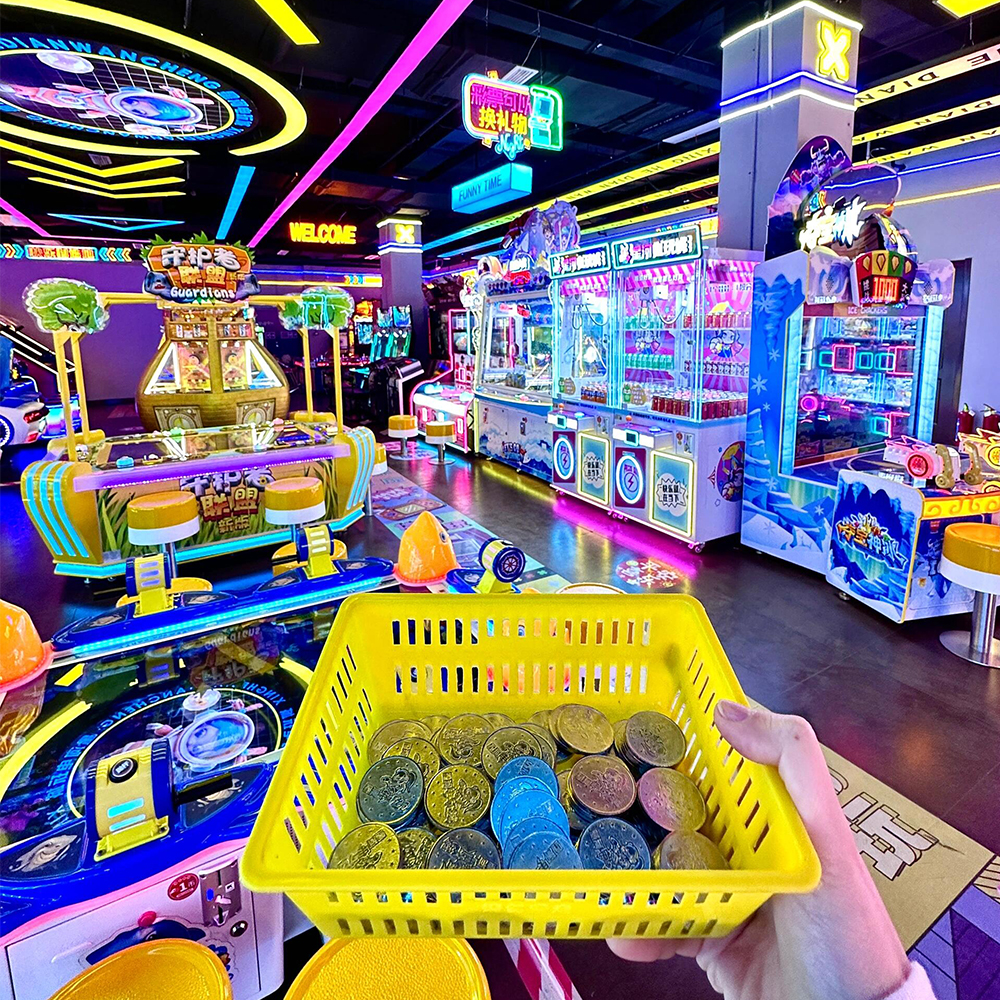
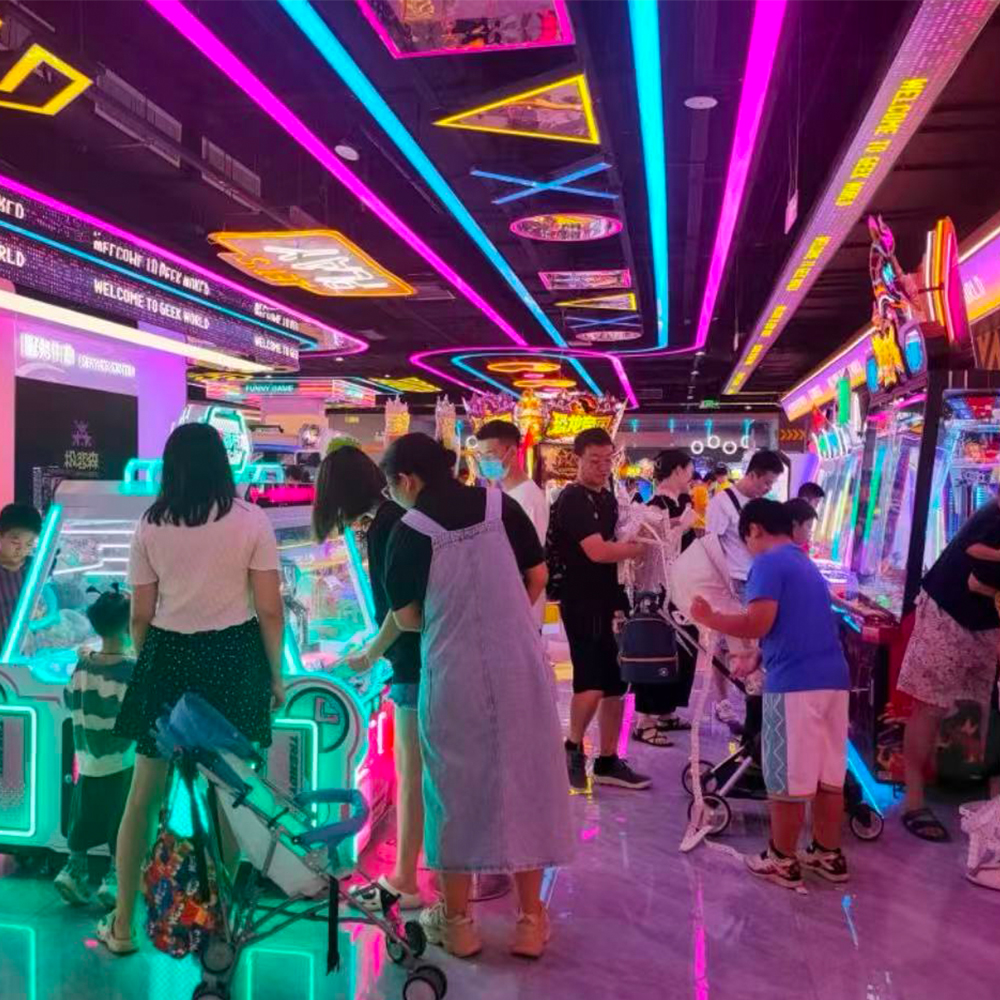
Driven by a passion for entertainment and a vision for the market, many dream of owning their own arcade. However, turning that dream into reality requires a rigorous business plan and a clear financial budget. This article aims to outline the main investment costs involved in opening an arcade, helping you shift from a “player’s” mindset to an “operator’s” mindset and make more informed decisions.
I. Initial Fixed Investments: The Hard Costs that Lay the Foundation This part forms the foundation for starting the project and is typically a one-time or long-term investment, accounting for the largest share.
1. Site Rent and Renovation (Approximately 30%-40% of Total Investment)
• Site Selection and Rent: This is one of the largest and most ongoing expenses. Location directly determines foot traffic and customer quality. Commercial complexes and areas with a high concentration of young customers are preferred, but rents are correspondingly high. Depending on the city tier and location, monthly rent can range from tens of thousands to hundreds of thousands of yuan. A substantial initial rent budget is necessary.
• Space Design and Decoration: Arcades are no longer just dimly lit and noisy “game rooms.” A modern, technologically advanced, and themed space design is the first step in attracting customers. Decoration costs include:
• Basic Decoration: Partitions, ceilings, flooring, electrical wiring (high-powered to power all equipment), lighting system. Costs are approximately 150-300USD per square meter or higher.
• Atmosphere Decoration: Customized logo, themed walls, professional lighting and sound systems, decorations, etc. This investment is highly flexible but crucial to brand image.
2. Gaming Equipment Procurement (Approximately 40%-50% of Total Investment)
This is the core asset, requiring the largest investment and the most careful budgeting.
• Equipment Classification and Budget:
• High-Traffic/Cash Cow Equipment: Claw machines, coin pushers, lottery machines. These machines have relatively low unit prices, but the demand is high, making them crucial for ensuring daily cash flow. Initially, 20-50 units may be needed, representing a significant portion of the budget.
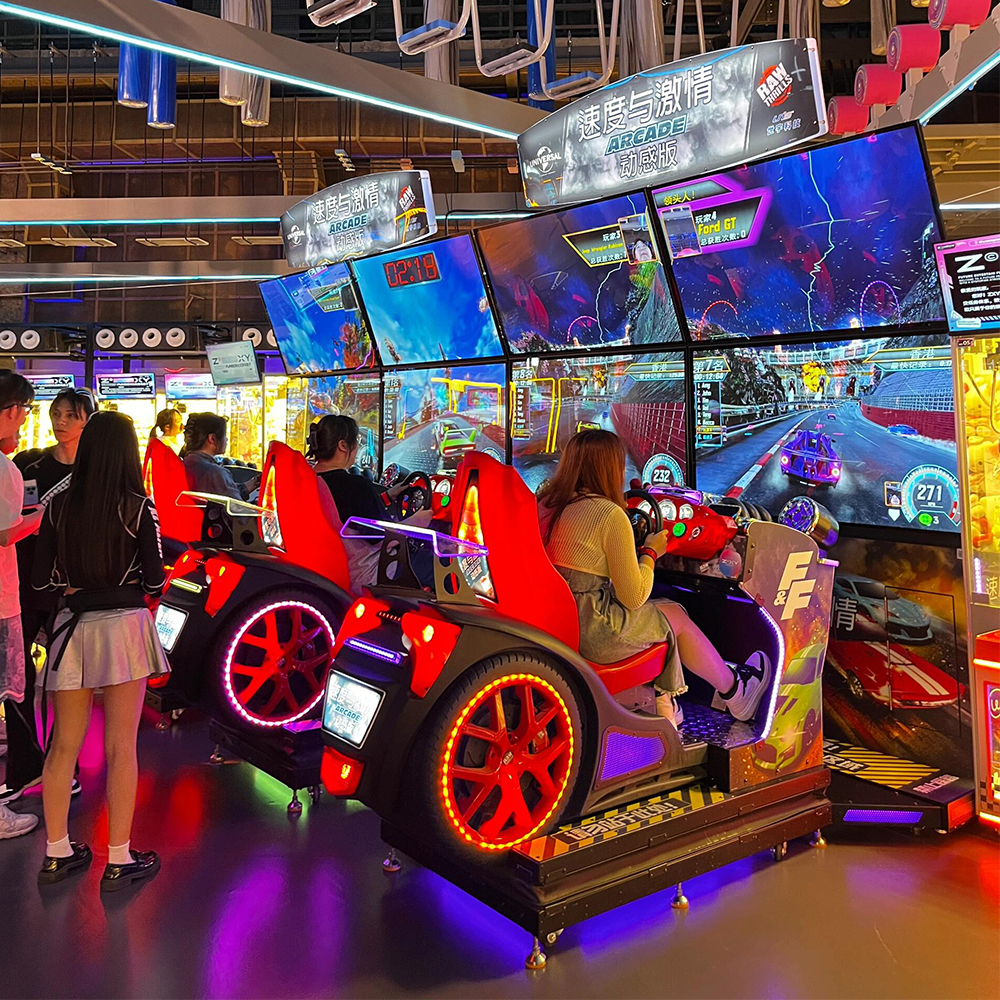
• Experiential/Signature Equipment: Racing simulators, rhythm games, shooting games, large-scale VR equipment, etc. These devices are expensive, ranging from tens of thousands to hundreds of thousands of yuan per unit. They are key to establishing the venue’s prestige and attracting core players, but the payback period may be long. 3-10 units should be carefully selected based on the target market.
• Procurement Channels: Imported brand-new equipment (high quality, expensive), equipment for the Chinese market(high cost-performance ratio), used equipment (low cost, risk of failure). It is recommended to purchase brand-new core equipment, while reliable used sources can be considered for some high-traffic equipment.
II. Mid-Term Operating Costs: The Lifeblood of Vitality Once the venue and equipment are in place, ongoing operating costs determine whether the business can operate healthily.
1. Staff Compensation
• Front Desk/Cashier: Responsible for selling tickets, issuing cards, and redeeming prizes.
• On-site Service Staff/Guides: Responsible for guiding customers, resolving simple equipment problems, and maintaining order.
• Technicians: Extremely important! Responsible for the daily maintenance and troubleshooting of equipment. A single piece of equipment that stops working is a pure loss; a skilled technician can significantly reduce downtime.
• Store Manager/Manager: Responsible for overall daily operations.
Depending on the city level, monthly labor costs are a fixed and significant expense.
2. Gift Procurement and Consumables
• Gift Costs: Plush toys for claw machines and prizes for lottery machines are recurring consumables. The selection of gifts directly affects the claw machine’s success rate and customer satisfaction. A stable procurement channel needs to be established, and gift costs must be strictly controlled within a reasonable percentage of revenue (e.g., 15%-25%).
• Game Tickets/Lottery Tickets: The “currency” for lottery machines, requiring regular replenishment.
• Other Consumables: Printing paper, cleaning supplies, etc.
III. Compliance and Marketing Costs: Indispensable Soft Investments 1. Licenses, Permits, and Legal Fees:
• Obtaining various venue operation permits is a prerequisite for legal operation.
• Note that according to the Ministry of Culture regulations, game and amusement equipment must not contain content promoting gambling. Ensure all equipment content is legal and compliant to avoid legal risks. Related consultation and processing may incur certain fees.
2. Marketing and Promotion Expenses:
• Grand Opening Marketing: Large-scale grand opening events, media promotion, etc., require a dedicated budget.
• Ongoing Marketing: Membership system management and promotions (such as top-up bonuses), online platform (Dianping, Douyin) operation and promotion, holiday themed events, community maintenance, etc. This part of the budget typically accounts for 5%-10% of monthly revenue.
IV. Risk Contingency Fund: A Safety Net for Businesses No matter how meticulous the plan, unexpected events can occur. These include large-scale equipment failures, business closures due to unforeseen public events, and lower-than-expected initial customer traffic. It is essential to prepare a contingency fund equivalent to 3-6 months of total operating costs to ensure the business has a buffer and adjustment space when encountering difficulties, preventing a break in the cash flow.
Summary and Budget Example: The cost of opening an arcade abroad varies greatly depending on the scale and location, but can be mainly divided into the following components:
1. Core Cost Components:
Equipment:The largest one-time investment. Used equipment costs $50,000-$150,000; brand new high-end machines (such as VR and simulators) cost over $300,000.
Location and Renovation: Depending on the location and level of the arcade, the initial investment typically ranges from $100,000 to $500,000.
Licenses and Compliance: A standard entertainment license may only cost a few thousand dollars, but if prize redemption is involved, license fees can exceed $1 million in some regions.
2. Examples of Investment Scope:
• Small to Medium-Sized: Located in non-core business districts, using second-hand equipment, with start-up capital of approximately $150,000 – $300,000.
• Large-Scale High-End: Located in top-tier shopping malls, equipped with brand-new technology and luxurious renovations, with costs easily exceeding $750,000 to $2,000,000.
This consumer guide aims to provide you with a clear financial roadmap. Successful arcade operators are not only dreamers who know how to create happiness, but also shrewd businesspeople who are adept at calculation. Before investing real money, we recommend that you prepare a detailed business plan and conduct thorough market research to ensure that your entertainment business dreams are built on a solid foundation.